In shortThe warm half of the year is the easy answer. LSU AgCenter records Louisiana animals feeding vigorously by late April and tailing off around early October, with mating in April and May, nest building in June and early July, and eggs hatching in August or early September. Below 55°F (12.8°C) they turn dormant, and they need about 70°F (21°C) before they will eat at all.
55°F (12.8°C)they go dormant below
about 70°F (21°C)needed before they eat
Late April to early Octoberpeak feeding window
9 to 11 incheshatchling size in August
When to see alligators in New Orleans
Go between late April and early October. LSU AgCenter records Louisiana alligators feeding vigorously by late April and tailing off around early October, and through that stretch they are moving, hunting and hauling out in the sun instead of lying low.
Picking a single month means weighing animal activity against your own comfort on a bench. Late April, May and early June give warm water and plenty of movement before the heat sets in. The catch with June to September is that the animals thrive in conditions you will not: highs sit in the low 90s°F and the heat index can reach 110°F while you sit still on an uncovered deck. October and November average highs in the 60s°F with lows in the 40s to 50s°F and rain less often, comfortable for people and still inside the tail of the feeding season.
Peak feeding season also overlaps the weather risk. Hurricane season covers June through November, and spring afternoons bring thunderstorms often enough to stop a boat leaving the dock. If your dates land in that window, leave a spare day in the itinerary.
Alligator activity and temperature in Louisiana
Two numbers explain most of it. The Park Service calls winter dormancy brumation rather than hibernation: it sets in below 55°F (12.8°C), and the animals can still rouse themselves and move. Feeding has a higher bar than movement, because an alligator must warm up before it can digest: it stops eating unless temperatures are above about 70°F (21°C), and the Everglades species profile sets that shutdown at water temperatures of roughly 68-73°F (20-23°C).
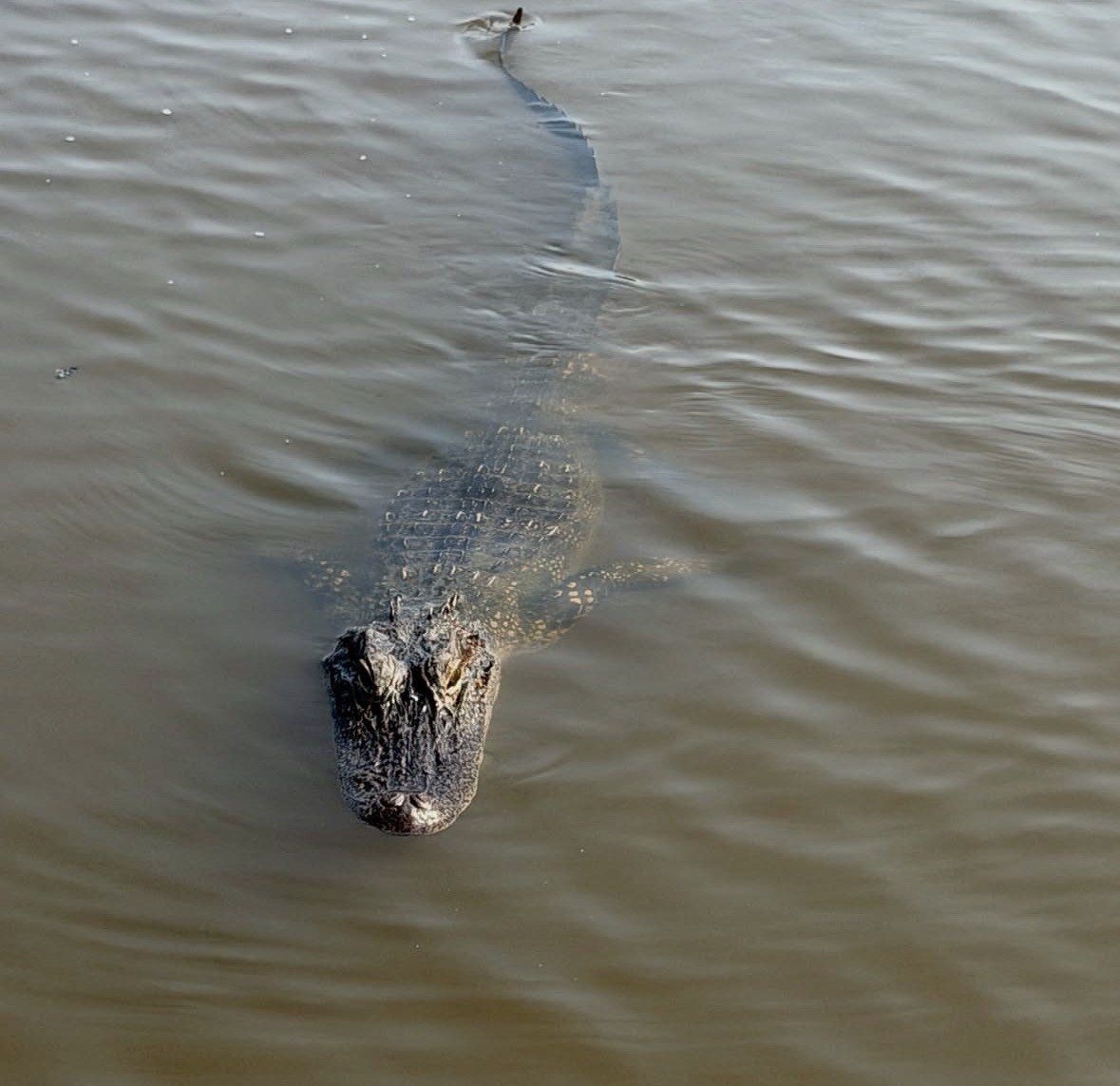
An alligator cannot make that heat itself, so basking matters to anyone watching from a boat. It has to take warmth from the sun and the water before it will hunt, and that is exactly when it lies out in the open on a bank or a log. Cool water under a bright, warm sky is what puts large animals up on the mud where a passing boat can see them.
The cruise built around alligators
If alligators are the whole point of going out, this narrated cruise puts them first and lets you pick the format: 1.25-4 hours, from $35, rated 4.3 ★ (1343 reviews), with transport included only if you choose that option.
★ 4.3/5 · 1,343 reviews
The breeding calendar, from mating to hatchlings
The pattern below comes from LSU AgCenter and the Park Service, and it tells you what the animals are occupied with when you arrive. A female guarding a nest in late June behaves nothing like a male cruising for a mate in April.
Incubation temperature sets the sex of the hatchlings. At Barataria the Park Service states that eggs above 90 degrees produce males and below 86 degrees females, while LSU AgCenter puts about 85°F at over 95% females, about 90°F mostly males and about 88.5°F an even split. Water is as much of a threat as heat, since flooding for more than 24 hours drowns the embryos.
| Period | What the alligators are doing |
|---|
| Late winter and early spring | Basking as the water warms, after a torpid winter |
|---|
| April and May | Mating |
|---|
| Late April onward | Feeding vigorously |
|---|
| June and early July | Nest building and egg laying; marsh nests reach about 3 feet high and 5 feet across |
|---|
| August or early September | Eggs hatch; hatchlings are 9 to 11 inches long |
|---|
| Around early October | Feeding tails off as temperatures fall |
|---|
| November to February | Torpid, surfacing only to breathe; basking on warm afternoons |
|---|
What changes between November and February
Alligators are still in the swamp in winter, they simply do far less. LSU AgCenter describes Louisiana animals as torpid through the cold months, surfacing only to breathe, and the Park Service notes that even in brumation they come out on warm winter days to bask, with large animals commonly seen doing it. A mild, bright afternoon in December or January can produce a very good sighting from a boat.
The 1991-2020 normals set your expectations. Daytime averages sit in the sixties right through the cold season: 64.8°F (18.2°C) in December, 62.5°F (16.9°C) in January, the coldest month, and 66.4°F (19.1°C) in February, with overnight lows of 48.4°F (9.1°C), 46.1°F (7.8°C) and 49.7°F (9.8°C) in the same order. Those extra degrees in February, plus the late-winter basking LSU AgCenter records, make it the best of the cool months for this.
Winter buys you sightlines. Bare cypress and thinner vegetation make the bank easier to read, and the birds take over the headline role, with ducks and raptors recorded from fall through spring in the Manchac-area marsh at Joyce WMA.
The best month to see alligators near New Orleans, and the best hour
May through September is the strongest run for activity, and the hour matters as much as the month. In high summer take the first boat of the day or the last one: highs in the low 90s°F and a heat index up to 110°F make midday uncomfortable, and the sun is at its worst when you are sitting still. On the covered boat with transportation that means the 9:30 AM or the 5:00 PM rather than the 12:15 PM and 2:45 PM slots, with pickup outside 317 North Rampart Street ahead of each one.
Reverse that in the cool months. After a January night starting from a normal low of 46.1°F (7.8°C), nothing has warmed up by 9:30 AM, so a middle departure gives the animals time to find the sun first. February and March afternoons are the best slot for basking.
Read against the alligator calendar, three of the tours listed here split the year between them:
- Late April to early October, when shade on the deck decides your afternoon: New Orleans Swamp and Bayou Boat Tour with Transportation, 5 hours, from $76, 4.9 ★ (7171 reviews), covered deck, live commentary on board, pickup from downtown New Orleans
- Cool months, when an open bench is pleasant: Large Airboat Swamp Tour with Transportation from New Orleans, 4 hours 15 minutes, from $90, 4.9 ★ (2132 reviews), with hotel pickup and drop-off
- Alligators as the reason for the trip: New Orleans Swamp and Bayou Alligator Tour, 1.25-4 hours, from $35, 4.3 ★ (1343 reviews), a narrated cruise with a local guide, transport included only if you select that option
Where they sit, and the rules on watching them
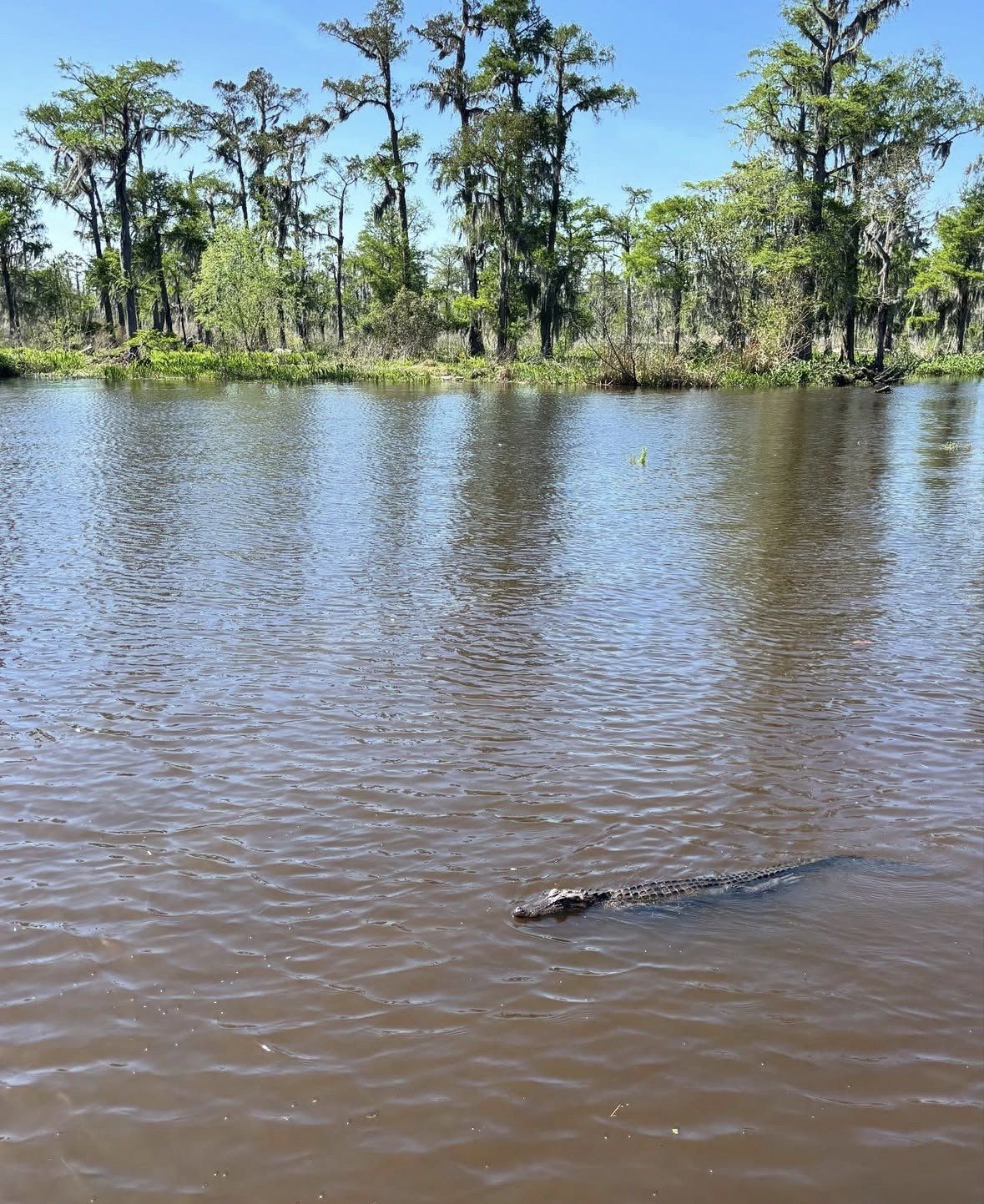
Look at the edges rather than open water. Alligators take their warmth from outside, so the places that repay attention are sunlit banks, the margins of canals and bayous, mudflats, and fallen logs at the waterline where an animal can lie half out of the water. In the cold months they stay submerged most of the time and surface only to breathe, so a dark line with two eyes in it is often all you get.
Trail-side sightings at Barataria Preserve are mostly off the table for now: the Visitor Center and most preserve trails have been shut since 2 February 2026 for Hurricane Ida repair work the Park Service expects to run about two years, and the closed list takes in the Bayou Coquille and Marsh Overlook boardwalk, Palmetto, Plantation, Old Barataria, Christmas Road, Ring Levee and Wood Duck.
The official instruction is short. Never approach, harass or feed an alligator, since they can move very quickly. Give any alligator or snake plenty of room, and never feed or try to catch wild animals. Inside Jean Lafitte National Historical Park and Preserve, putting food out for an alligator or any other animal is against park rules.
No boat can guarantee a sighting, in any month. These are wild animals spread across about 26,000 acres of bayous, swamps, marshes and forests on the Barataria side alone, and a cold front or a grey afternoon changes what a two-hour cruise turns up.
Questions people ask
Which month is the weakest for alligator sightings?
January. It is the coldest month on the normals, averaging 62.5°F (16.9°C) through the day and falling to 46.1°F (7.8°C) at night. LSU AgCenter describes the animals as torpid then, surfacing only to breathe, and the Park Service puts dormancy below 55°F (12.8°C). A sunny afternoon can still bring big animals out to bask, so take a middle departure rather than the first boat.
Can a tour promise I will see an alligator?
No. These are wild animals, and the Park Service gives no month-by-month visibility guidance. What you see from a boat depends on temperature, cloud cover and luck, which is why the warm months and the basking hours are the way to improve your odds.
Will I see baby alligators in late summer?
Eggs hatch in August or early September and the hatchlings are 9 to 11 inches long, small enough to miss from a moving boat. A nest holds one year's clutch of 20 to 50 eggs, laid by a female that has reached about 6 feet and 10 to 12 years of age. Keep well away from any nest or group of young, in line with the official instruction to give alligators plenty of room.
What should I bring in alligator season?
Insect repellent first. Mosquito activity in the preserve runs through most of the year on the Park Service's account, which is why it puts repellent on the packing list; the same guidance flags stinging caterpillars and fire ants and asks for closed-toe shoes when you are outdoors. In the warm months add sun cover and water, since the deck gives you little or no shade.
Are there still plenty of alligators in the Louisiana wild?
Hunting was banned in the mid-to-late 1960s and reopened under regulation in 1972, and the wild harvest has run at roughly 30,000 animals a year since, which tells you how large the regulated population is. Barataria Preserve also records nine turtle species and 22 snake species, with only the cottonmouth and the copperhead venomous.
Read also