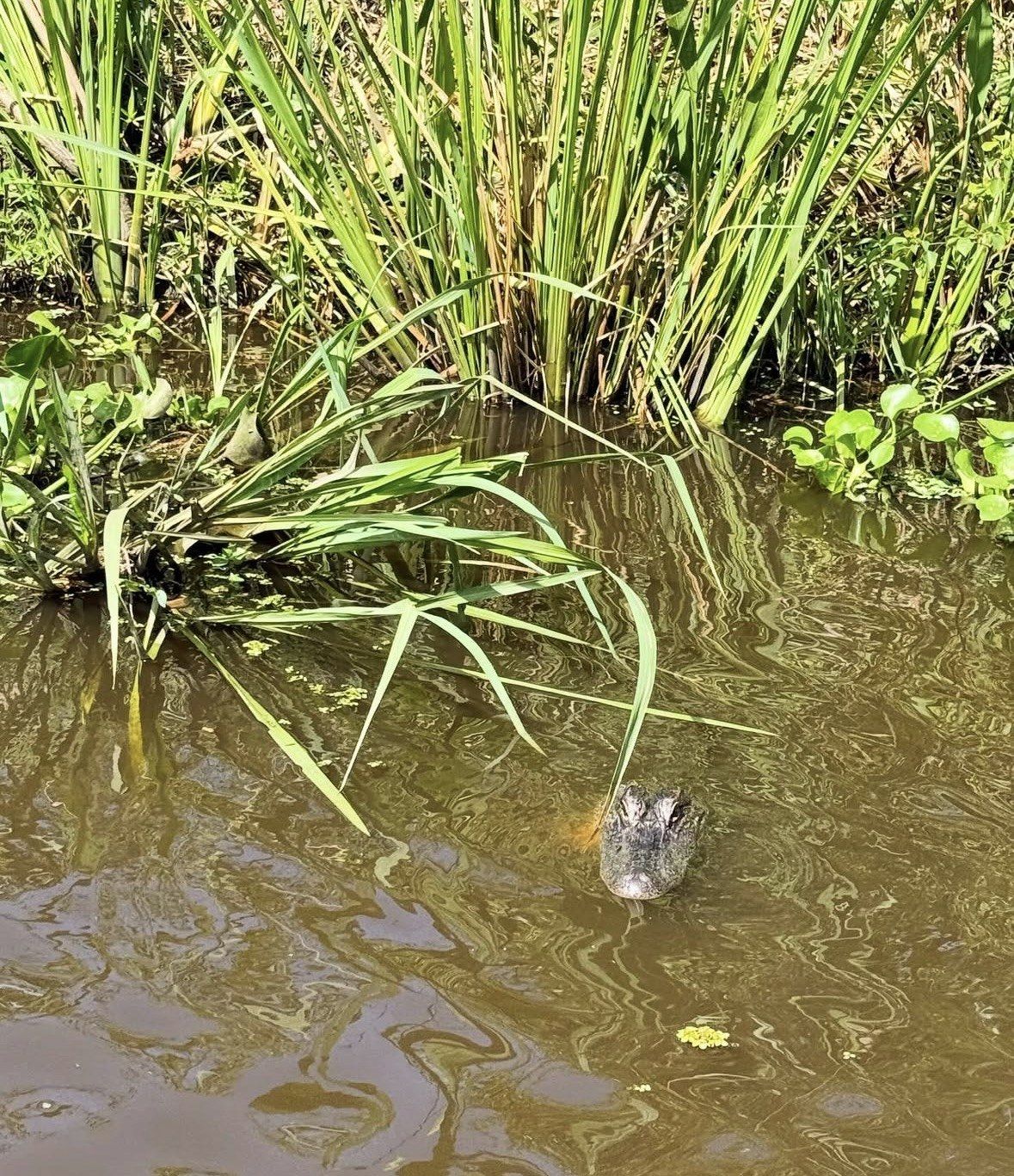
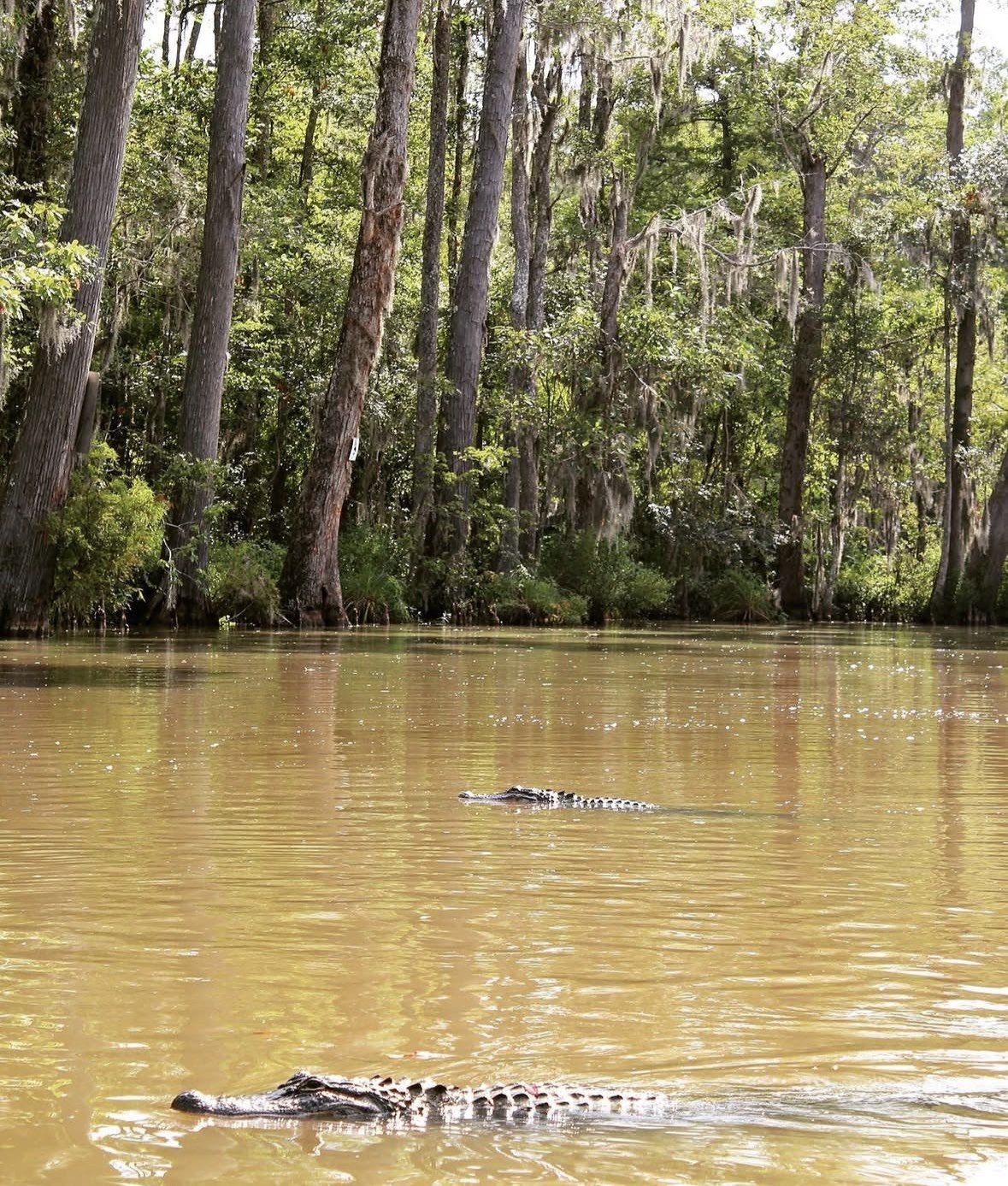
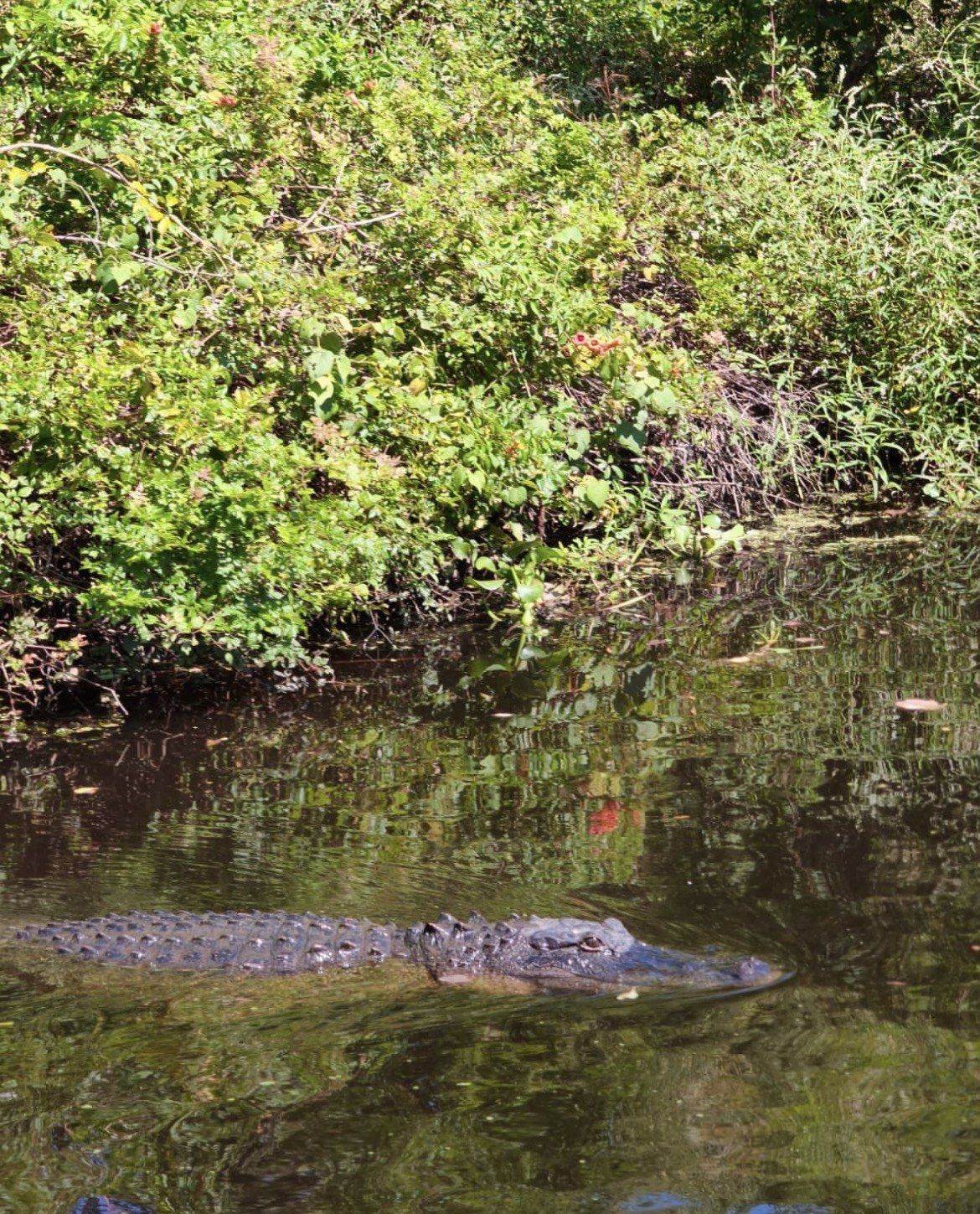
In shortYes, for most visitors. Nothing inside the city puts you in cypress water with alligators, nutria and part of the 200-plus bird list recorded on Barataria's waterways. Budget 5 hours door to door for the Honey Island boat with transport, from $76, or 1.25-4 hours for the alligator cruise, from $35. Cool months are the weak spot: alligators go dormant below 55°F (12.8°C).
from $76Honey Island boat with transport
5 hoursdoor to door from downtown
4.9 ★ (7171 reviews)rating on that boat tour
55°F (12.8°C)alligators go dormant below
What the water gives you that the city does not
The wetlands start close. Barataria Preserve, at 6588 Barataria Blvd in Marrero, is placed 30 minutes outside the French Quarter by New Orleans & Company, the Marrero docks at 6601 Leo Kerner Lafitte Parkway and 4757 Orleans Way are given as 25 minutes out, and the Honey Island dock area at 55345 US-90, Slidell sits about 35 miles away on I-10 East. Inside that half-hour radius the preserve alone covers about 26,000 acres of bayous, swamps, marshes and forests.
What the ticket really buys is odds on a long species list. The bird count on Barataria Preserve's waterways and vegetation runs past 200 species, helped by its position on the Mississippi Flyway, while 214 species are on record for Pearl River WMA and the Honey Island Swamp, and the preserve's own inventory adds nine turtle species and 22 snakes, just two of them venomous. Raccoons are listed as abundant, and nutria as common in swamp and abundant in marsh.
There is also the part a guide fills in while the boat is moving. The Park Service defines a bayou as a constantly flowing, typically wide and shallow marshy waterway, from the Choctaw word 'Bayuk' meaning small stream, while a swamp is a wetland dominated by woody plants such as cypress, red maple, overcup oak and willows. The Spanish moss overhead is an epiphyte that takes moisture and nutrients from the air, closer kin to a pineapple than to any moss.
Is a swamp tour in New Orleans worth it if you only have two days
It costs one half-day, and that is the honest price of it. The Honey Island Swamp and Bayou Boat Tour with Transportation is listed at 5 hours door to door from $76, and a good share of that is road time, because the boats are out of town. The four pickups are built around boats at 9:30 AM, 12:15 PM, 2:45 PM and 5:00 PM, leaving from outside the Homewood Suites French Quarter at 317 North Rampart Street well ahead of each one at 8:00 AM, 10:15 AM, 1:15 PM and 3:30 PM, and the shuttle goes as soon as its window opens.
The airboat version is shorter at 4 hours 15 minutes, from $90, with hotel pickup and drop-off and a professional guide inside that figure. If your schedule is tighter than either, the Swamp and Bayou Alligator Tour runs 1.25-4 hours depending on the option you pick, from $35, with transport included only when you select that option; with transport you meet at the Gray Line Lighthouse on Toulouse Street at the Mississippi River, and the self-drive option leaves from 5145 Fleming Park Road in Lafitte.
Pick the slot by the month rather than by what is left in your diary. June to September is humid, with highs often in the low 90s°F and a heat index that can hit 110°F, which leaves the first departure of the day as the only comfortable one. Come in October or November, when average highs sit in the 60s°F, lows in the 40s to 50s°F and rain is less frequent, and the choice between the four departures stops mattering.
The half-day that answers the question
A first-timer arriving without a car has little to weigh up here: 5 hours door to door, from $76, rated 4.9 ★ (7171 reviews), a quiet flat-bottom boat, a professional guide and transport out of downtown New Orleans.
★ 4.9/5 · 7,171 reviews
Swamp tour or something else in New Orleans
The city's tourism bureau lists six distinct swamp formats near New Orleans: boat, airboat, kayak, aerial, walking and a swamp zipline in LaPlace. Among the tours on this site the decision narrows to three: a quiet flat-bottom boat with live commentary, a large airboat with speed and noise, or a narrated cruise built around alligator water.
Walking is not the substitute it was. The Visitor Center at Barataria Preserve and most of its trail network went offline on 2 February 2026 for Hurricane Ida repairs that the National Park Service puts at roughly two years, and the closed list runs from Bayou Coquille and the Marsh Overlook boardwalk through Palmetto, Plantation, Old Barataria, Christmas Road, Ring Levee and Wood Duck. Over 9 miles of hiking trails are credited to the preserve by the Louisiana Office of Tourism, and most of that mileage stays out of use through the 2026 and 2027 seasons.
Choose the format by what you want to happen on the water. A covered deck gives you a roof, a bench you can shift along and a guide talking the whole way; New Orleans & Company points families with young children to those slower boats. An airboat is an open bench, fast and loud, and the six-passenger airboat on this site sets a minimum age of 5.
Who tends to be disappointed
The common letdown is a cool-month trip booked on the promise of alligators at arm's length. The Park Service calls their winter dormancy brumation rather than hibernation, setting in below 55°F (12.8°C) with the animals still able to wake and move, and notes they must warm up before they can digest, so feeding stops unless it is above roughly 70°F (21°C); the Everglades species profile puts the shutdown at water temperatures of about 68-73°F (20-23°C). LSU AgCenter's account of the state's alligators matches that pattern: torpid through winter, surfacing only to breathe, out basking in late winter and early spring, then feeding vigorously by late April.
- Anyone expecting a close encounter on demand: large alligators are commonly seen basking on warm winter afternoons, but a January day that starts from a normal low of 46.1°F (7.8°C) and only reaches 62.5°F (16.9°C) keeps them still and low in the water.
- Families with a toddler who have bought airboat tickets: check the age rule first, because the six-passenger airboat on this site does not carry anyone under 5.
- Travellers who want to get nearer for a photograph: the Park Service rule is never to approach, harass or feed alligators, because they move very quickly, and feeding wildlife is prohibited in the park.
- Anyone with a single spare afternoon in hurricane season, which runs June through November, or in spring, when afternoon thunderstorms are frequent and can stop boats going out.
- Anyone who turns up in sandals with nothing on their skin: mosquitoes stay active most of the year in the preserve, the park adds warnings about fire ants and stinging caterpillars, and its stated advice is insect repellent with closed-toe shoes.
How to read ratings and the lines in a listing that matter
Read the review count before the score. A 4.9 carried by 7171 reviews, as on the Honey Island boat with transportation, has settled; the same number sitting on a few dozen reviews has not. A lower average is not automatically a worse boat either: the Swamp and Bayou Alligator Tour shows 4.3 ★ (1343 reviews) and sells several very different trips under one listing, from 1.25 hours to 4 hours with transport optional, so people are scoring experiences that were never the same length or shape.
The lines that decide whether you enjoy the day are further down the page. Check the boat type, how many guests it holds, the duration and whether that duration is time on the water or door to door, and whether transport from New Orleans is included or you are driving to the dock. Then read the meeting point and the arrival rule, because both the shuttle pickups and the dock boats go on schedule.
- Boat type: a covered flat-bottom deck against an open airboat bench, which also sets the noise and the age floor.
- Group size and whether the tour is sold as small group, since that changes how often you get the guide's attention.
- Duration as published, and whether road time is inside it: 5 hours door to door is not 5 hours in the swamp.
- Transport: included from downtown, hotel pickup and drop-off, selectable as an option, or not included at all.
- Meeting point and arrival time, from 317 North Rampart Street at the start of a pickup window to a dock check-in before the stated departure.
- What is not included, usually food, drinks and gratuities.
| Tour | Format | Duration | From | Rating | Transport from New Orleans |
|---|
| New Orleans Swamp and Bayou Boat Tour with Transportation | 22-passenger flat-bottom boat, live commentary | 5 hours | from $76 | 4.9 ★ (7171 reviews) | included from downtown New Orleans |
|---|
| Large Airboat Swamp Tour with Transportation | large airboat, professional guide | 4 hours 15 minutes | from $90 | 4.9 ★ (2132 reviews) | hotel pickup and drop-off included |
|---|
| New Orleans Swamp and Bayou Alligator Tour | narrated boat cruise, local guide | 1.25-4 hours | from $35 | 4.3 ★ (1343 reviews) | only if the transport option is selected |
|---|
Which of the three to book
The Honey Island Swamp and Bayou Boat Tour with Transportation is the one that fits a first visit with no car: 5 hours from $76, rated 4.9 ★ (7171 reviews), with a professional guide, live commentary on board, wildlife encounters and life jackets listed for guests under 16. Stand outside 317 North Rampart Street from the moment your pickup window starts.
If the appeal is speed rather than commentary, the Large Airboat Swamp Tour with Transportation runs 4 hours 15 minutes from $90, rated 4.9 ★ (2132 reviews), with hotel pickup and drop-off and a guide. Check the age rules if young children are coming.
If alligators are the whole point and your day is already half spoken for, the Swamp and Bayou Alligator Tour is the flexible one, 1.25-4 hours from $35, rated 4.3 ★ (1343 reviews), a narrated cruise with a local guide and transport only when you choose that option. Decide the option before you pay, then check the departure time against the month: morning from June to September, midday or early afternoon in January and February.
Questions people ask
Is a swamp tour worth it in January or February?
It is, provided you go out for the cypress, the open sightlines and the birds as much as for alligators. The normals are 62.5°F (16.9°C) by day and 46.1°F (7.8°C) at night in January, with February warmer at 66.4°F (19.1°C) and 49.7°F (9.8°C), and dormancy beginning under 55°F (12.8°C), which pushes the sensible booking to a midday or early-afternoon slot instead of the first boat out. Large animals do come out to bask on warm winter afternoons.
Will I definitely see an alligator?
No tour can promise one. What you see depends on the thermometer: feeding stops unless it is warmer than about 70°F (21°C), and the Everglades profile sets that cut-off at water temperatures of roughly 68-73°F (20-23°C). From late April they are feeding vigorously, and activity tails off around early October.
What should I wear and take on board?
Closed-toe shoes and insect repellent, both of which the park advises for outdoor time here, since mosquitoes are active most of the year and there are stinging caterpillars and fire ants on land. Add one light layer in October and November, when highs sit in the 60s°F and lows in the 40s to 50s°F, and a windproof layer in winter for a deck in motion. Food, drinks and gratuities are not included on any of the three tours above.
Is the airboat worth more than the flat-bottom boat?
Only if the speed and the noise are what you came for. The large airboat with transportation is 4 hours 15 minutes from $90, rated 4.9 ★ (2132 reviews), against 5 hours from $76 and 4.9 ★ (7171 reviews) on the Honey Island flat-bottom boat, which also carries live commentary throughout. For young children the city's tourism bureau points to the slower swamp boats, and the six-passenger airboat on this site starts at age 5.
Read also