In shortA New Orleans swamp tour in winter keeps the same timetable as the rest of the year, with boats leaving four times a day at the main docks. Bare cypress opens the sightlines, waterfowl and raptors are easier to pick out, and alligators go dormant below 55°F (12.8°C) while still basking on warm afternoons. January normals give a daytime high of 62.5°F (16.9°C), so pack a windproof layer and take a covered deck.
62.5°F (16.9°C)January normal high
55°F (12.8°C)Alligator dormancy threshold
4 departures dailyYear round at Honey Island
from $76Covered boat with transport
What a New Orleans swamp tour in winter actually shows you
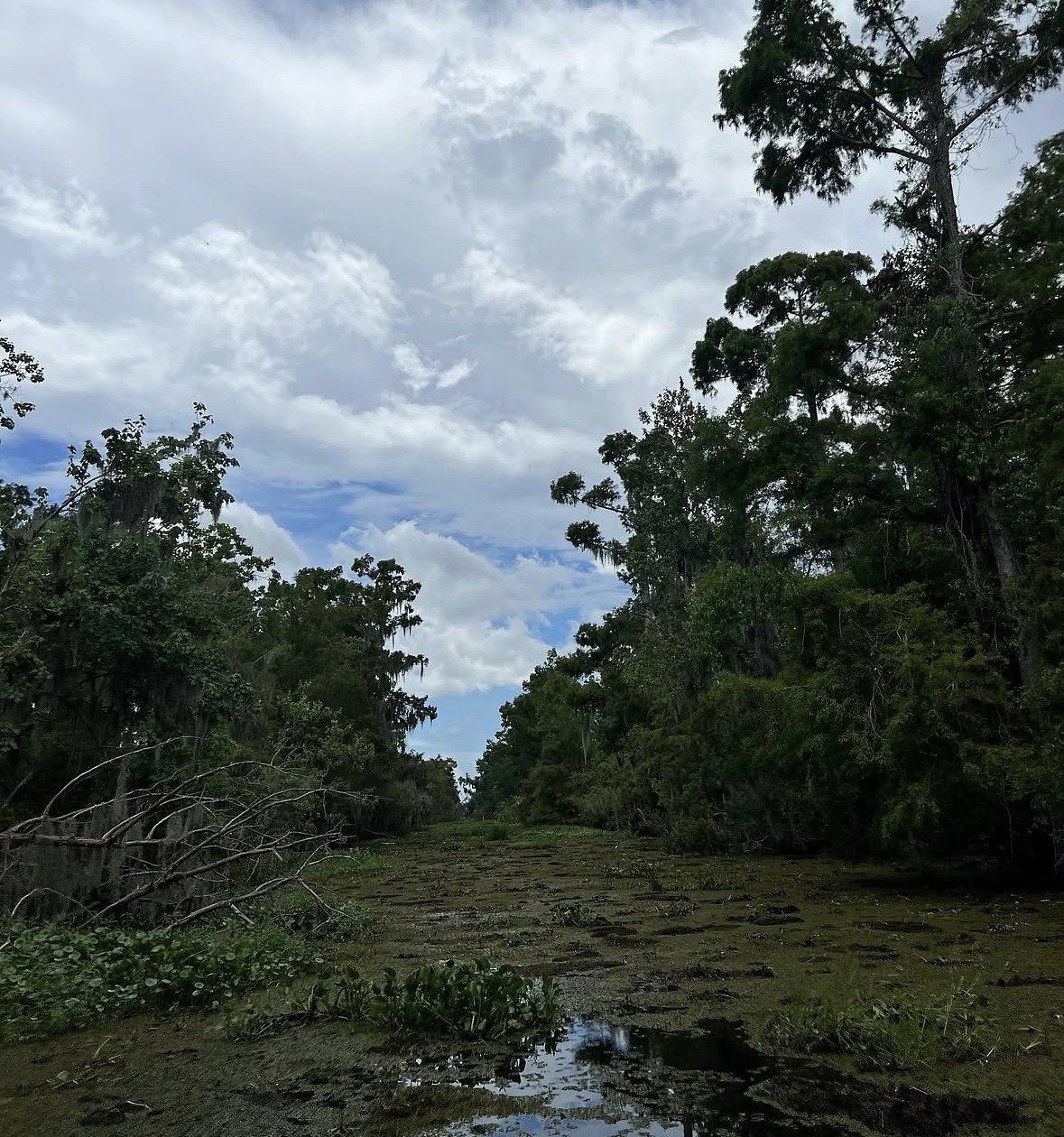
The swamp opens up. By December the cypress needles are down and the understory has thinned, so from the bench you see a long way back between the trunks instead of a green wall along the bank. Old woodpecker holes, the line of the channels and the shape of the ground behind them all become visible.
Spanish moss stays on the branches through the cold and hangs grey against bare wood. The Park Service describes it as an epiphyte rather than a parasite: it takes moisture and nutrients out of the air, damages nothing unless it grows dense and heavy, and it is closer kin to pineapples and other bromeliads than to any moss.
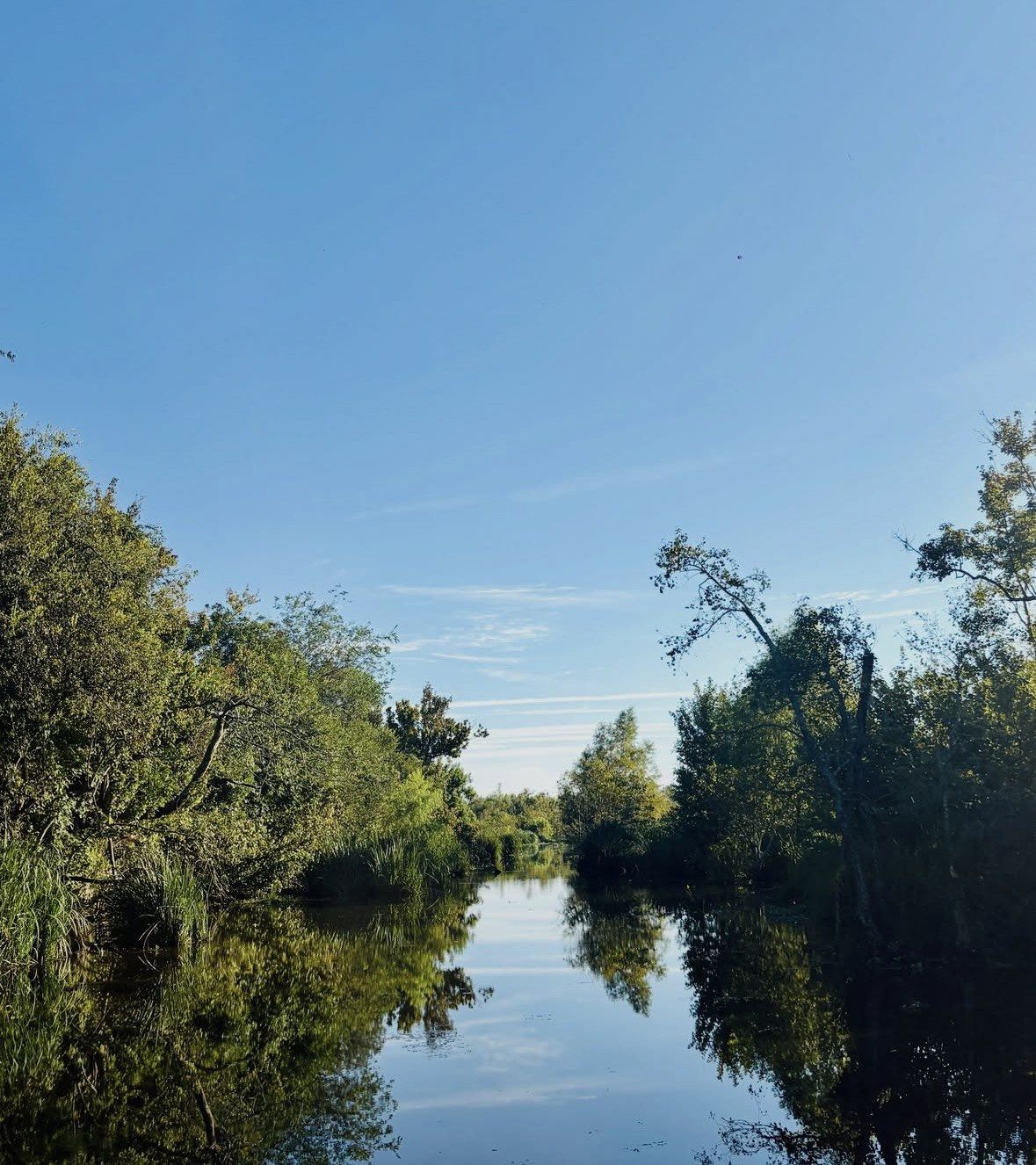
Forested swamp sits under many feet of slow-moving or standing water, while a bayou is the constantly flowing part of a stream or estuary. That is why one stretch of the route sits still like a mirror and the next has a current running through it.
- Pileated, Red-bellied, Downy and Hairy Woodpeckers, all year-round residents at Barataria Preserve, working trunks with no leaves in the way
- Barred Owl, another resident, sitting out in plain sight on a bare limb
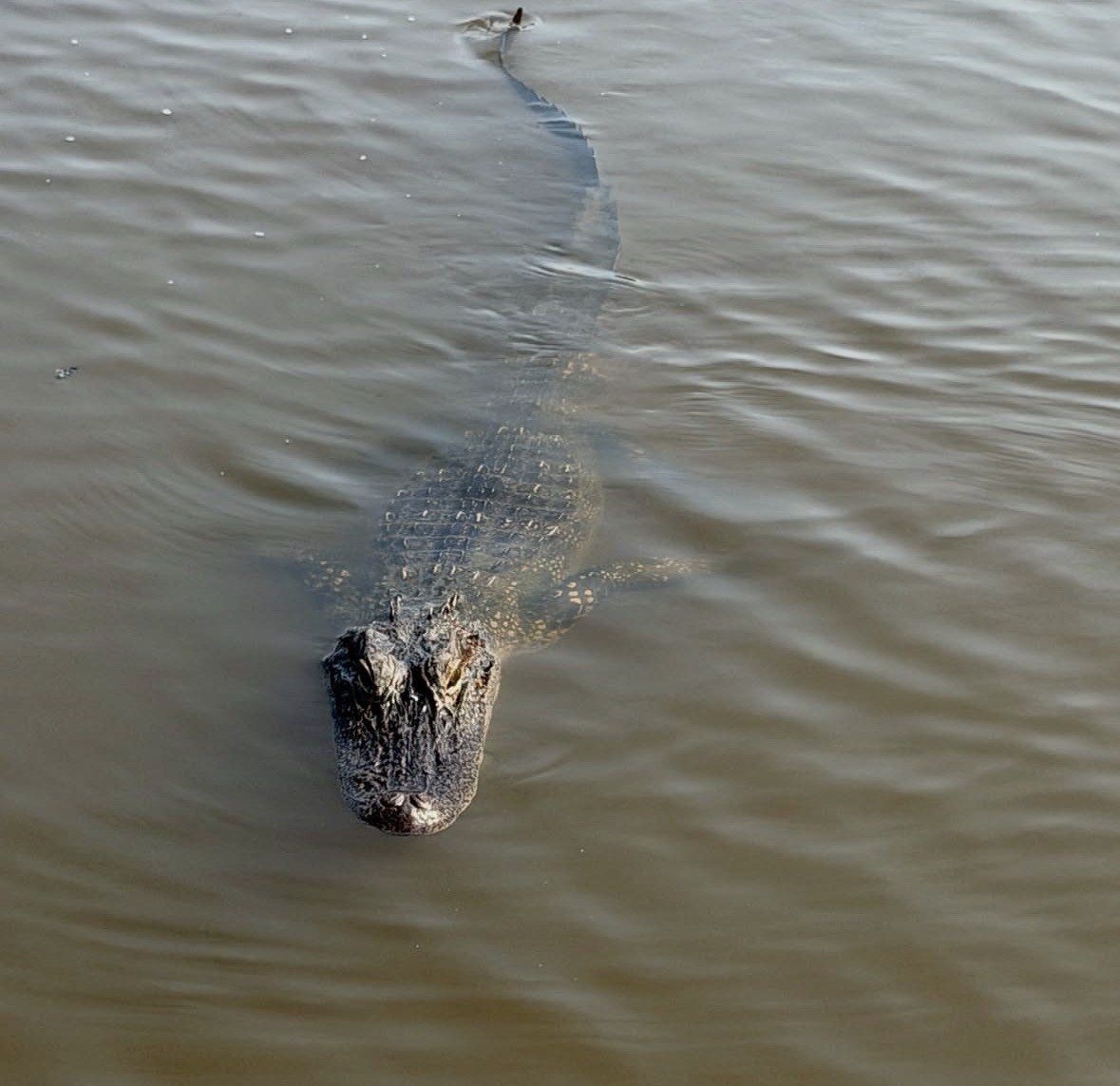
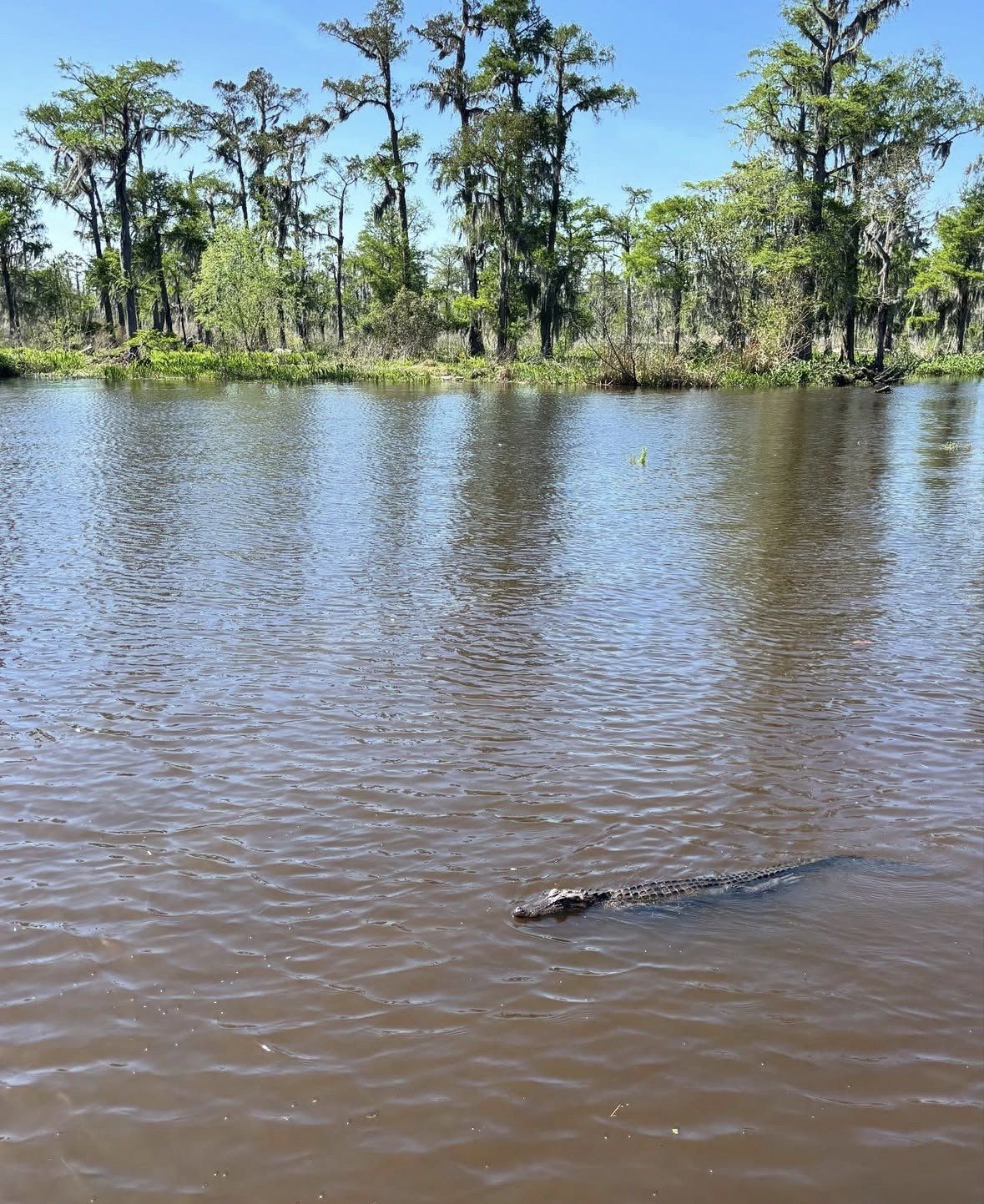
- Large alligators up on banks and logs, which the Park Service calls a common winter sight
- Raccoons, abundant in these wetlands, and nutria, common in swamp and abundant in marsh
- Ducks out on open water: American Wigeon, Green-winged Teal, Ring-necked Duck, Black-bellied Whistling-Duck, Wood Duck and Hooded Merganser are all on the Manchac-area list
Winter alligators in the Louisiana swamp
Alligators stay put through the cold and slow right down. The Park Service explains that they brumate rather than hibernate, going dormant once temperatures drop below 55°F (12.8°C) while keeping the ability to wake and move, and LSU AgCenter describes Louisiana animals as torpid in winter, surfacing only to breathe.
Digestion sets the limit. An alligator has to warm up before it can process food, so the Park Service notes that feeding stops unless temperatures rise above roughly 70°F (21°C), and the Everglades species profile puts the shutdown at water temperatures of about 68-73°F (20-23°C). Nobody will show you a feeding animal in January, and no guide should be feeding one in any month, since that is prohibited in the national park.
Basking is the thing to watch for. On warm winter days the animals come out to warm up, the big ones most visibly, and LSU AgCenter records basking through late winter and early spring. Let the day get going before you go out: in January the morning starts from a normal overnight low of 46.1°F (7.8°C), so a midday or early-afternoon boat has better odds than the first one off the dock.
Covered deck, transport included
For a winter trip this is the straightforward choice: 5 hours door to door from $76, rated 4.9 ★ (7171 reviews), with a roof over the bench, live commentary on board and a shuttle from downtown instead of a cold wait at the dock.
★ 4.9/5 · 7,171 reviews
The birds of the cold months
Raptors are the clearest seasonal gain. On the power line crossing the marsh at Joyce WMA in the Manchac wetlands, the state birding guide lists Sharp-shinned Hawk, Cooper's Hawk and Bald Eagle from fall through spring, at a site with nearly 200 species logged.
Waterfowl numbers build as the season goes on. The US Fish and Wildlife Service counts thousands of waterfowl on Bayou Sauvage Urban National Wildlife Refuge, inside the city limits, in late winter and spring, which puts February at the fuller end of the cold season, while the refuge's wading birds hold on through all twelve months.
Winter costs you some species too. The headline totals, more than 200 bird species on Barataria Preserve's waterways along the Mississippi Flyway and 214 recorded in the Honey Island Swamp, include breeders you will not see from a December boat: the Swallow-tailed Kite, Acadian Flycatcher and Swainson's Warbler nest in the warm half of the year, and hawks, eagles and ducks take their place on the winter list.
What to wear on an open deck versus a covered boat
Air temperature is the easy half of the calculation. The 1991-2020 normals for New Orleans give you a workable picture of all three winter months.
Wind is what you feel on the water. A boat under way makes its own breeze, and you sit still for 1 hour 40 minutes to about two hours with water on both sides, so the forecast flatters the ride. A windproof shell over two thin layers beats one thick fleece, and gloves earn their place on the first and last departures of the day.
Boat type counts for more in winter than in any other season. A covered flat-bottom swamp boat gives you a roof and sides to break the airflow, and the covered boats at the Honey Island dock are listed for up to 22 guests. An airboat is an open bench by design: faster, loud enough to need ear protection, and, on the six-passenger airboat on this site, set at a minimum age of 5. From December through February, take the covered deck.
- A windproof outer layer, chosen for the shell rather than the padding
- Gloves and a hat for the morning and late-afternoon slots
- Two thin layers underneath, so you can open up when sun lands on the deck
- Closed-toe shoes, which the Park Service advises for outdoor time in these wetlands
- Insect repellent in the bag even in January, because the Park Service puts mosquito activity in the preserve at most of the year
| Month | Normal high | Normal low | What that means on deck |
|---|
| December | 64.8°F (18.2°C) | 48.4°F (9.1°C) | Comfortable by day, jacket for the ride back |
|---|
| January | 62.5°F (16.9°C) | 46.1°F (7.8°C) | Coldest month: windproof layer and gloves |
|---|
| February | 66.4°F (19.1°C) | 49.7°F (9.8°C) | Warmest winter afternoons; a shell is usually enough |
|---|
Departures keep running, and the boats are quieter
Nothing shuts for the season. The operator pages state that boats leave the Honey Island dock area four times a day year round with about two hours on the water, and the second operation there runs its two-hour trips daily year round with morning and afternoon slots, closing only for the major holidays and asking for a reservation ahead.
One timetable has a gap worth knowing about. The LaPlace wildlife-refuge dock publishes 9:30 AM, 12:00 PM and 2:15 PM with trips of about 1.5 hours, and marks its 4:15 PM slot seasonal, so check that last departure on the day instead of planning a winter afternoon around it.
The covered boat sold with transportation holds all four start times through the winter: 9:30 AM, 12:15 PM, 2:45 PM and 5:00 PM, collected at 8:00 AM, 10:15 AM, 1:15 PM and 3:30 PM outside 317 North Rampart Street, with the shuttle leaving promptly. Take one of the middle two in January and February, because the 3:30 PM pickup sends you out as the light is already going.
These docks are also quieter in winter than in the warm half of the calendar. A covered boat listed for up to 22 guests feels roomy in January in a way it never does in July, and there is space to shift along the bench when something shows up on one side.
- No car in December or January: New Orleans Swamp and Bayou Boat Tour with Transportation, from $76, 5 hours, 4.9 ★ (7171 reviews), a roof over the bench and live commentary on board, with the shuttle collecting you outside 317 North Rampart Street instead of a cold wait at the dock
- Driving yourself and want a short slot between other plans: New Orleans Swamp Tour Boat Adventure, from $35, 1 hour 40 minutes, 4.9 ★ (2348 reviews), out of 9706 Barataria Blvd in Marrero, where you need to be there at least 20 minutes before the stated time
Questions people ask
Do swamp tours run on Christmas and New Year's Day?
Departures continue through the winter, and the holidays are the one gap. One of the Honey Island operations states on its own site that it runs daily year round except the major holidays, and that it requires a reservation. If your dates fall on a holiday, confirm the departure before you build the day around it.
Do I still need insect repellent in December?
Yes. Repellent belongs in a winter bag because the Park Service puts mosquito activity in these wetlands at most of the year and tells visitors to bring some, alongside its warnings about stinging caterpillars and fire ants. The same guidance asks for closed-toe shoes for any outdoor activity here, which is sensible footwear on a boat deck in any case.
Can I walk the Barataria Preserve boardwalks this winter?
Most of them are out of action. Hurricane Ida repair work starting on 2 February 2026 took the Visitor Center and the bulk of the trails out of service for a period the National Park Service estimates at about two years, which covers the Bayou Coquille and Marsh Overlook boardwalk along with Palmetto, Plantation, Old Barataria, Christmas Road, Ring Levee and Wood Duck. A boat tour is the way onto the water while that work runs.
Is February a better bet than January?
February is the mildest of the three winter months, with normals of 66.4°F (19.1°C) by day and 49.7°F (9.8°C) overnight, against January's 62.5°F (16.9°C) and 46.1°F (7.8°C). Those few degrees count for basking, since alligators are dormant below 55°F (12.8°C) and LSU AgCenter records them basking in late winter and early spring. If your dates are flexible, aim late in the season.
Does an airboat make sense in winter?
It is the harder ride in the cold. An airboat is an open bench with no roof and no sides, it is loud enough to need ear protection, and the six-passenger airboat on this site is restricted to ages 5 and up. The covered flat-bottom swamp boat spends about the same length of time on the water and keeps the moving air off you, so that is the cool-season pick.
Read also